1st Workshop on Perceptual Challenges for Planetary Exploration

IEEE International Conference on Robotics and Automation

Friday 5th June 2026

News

  • 2026-06-01Request link for online participance --> Click Here!
  • 2026-05-22Finalized list of accepted poster contributions
  • 2026-03-4Paper submission deadline extended!
  • 2026-02-11Updated sponsor information and best poster prizes!
  • 2026-02-01Program and speaker lineup finalized.

Enabling the next generation of space robotic missions

Future planetary exploration envisions robotic agents not only as explorers collecting data, but also as partners in building infrastructure to sustain human activities in space. These agents must sense, act, and interact as extensions of astronauts, while autonomously establishing systems that enable long-term operation, communication, and habitation. Achieving this requires advanced environmental understanding. In the absence of global positioning, accurate localization relative to local scenes is critical for tasks such as grasping and manipulation.

Place recognition enables long-term SLAM stability, while semantic mapping offers contextual information for mission control and terrain traversability assessment. Planetary surfaces present severe challenges: unstructured environments, visual and structural aliasing, lack of distinctive features, and harsh illumination (e.g., lunar south pole). Energy and computational constraints amplify these difficulties. Multi-modal perception — combining visual, LiDAR, and radar sensing — together with deep learning approaches can improve robustness, supporting scene re-detection and semantic interpretation for human interaction.

Recent and planned missions (e.g., NASA’s Curiosity, Ingenuity, and CADRE; JAXA/DLR’s MMX; JPL’s EELS) highlight both the rapid growth of planetary robotics and the complexity of emerging requirements, from autonomous flight to non-wheeled locomotion. These illustrate the pressing need for novel methodologies addressing the perceptual challenges of localization, navigation, and in-situ operations.

This workshop will provide a platform for exchange between mission practitioners and methodological innovators, fostering new solutions to these fundamental problems.
Location

Where

Location TBD

Vienna, Austria

Register

Registration

To receive a link to the online platform, please fill the Google Form accessible clicking the button below!

Organizers

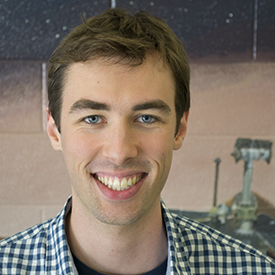
Riccardo Giubilato
Riccardo Giubilato
German Aerospace Center (DLR)
David Rodriguez Martinez
Unversity of Malaga
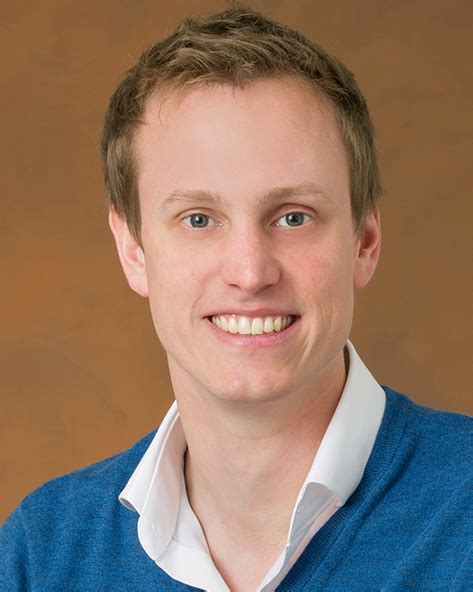
Olivier Lamarre
Olivier Lamarre
University of Toronto
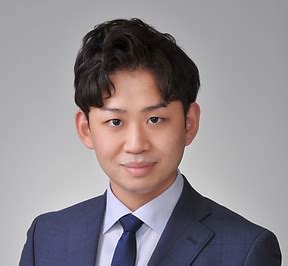
Kentaro Uno
Kentaro Uno
Tohoku University
Raul Castilla Arquillo
SpaceR, University of Luxembourg
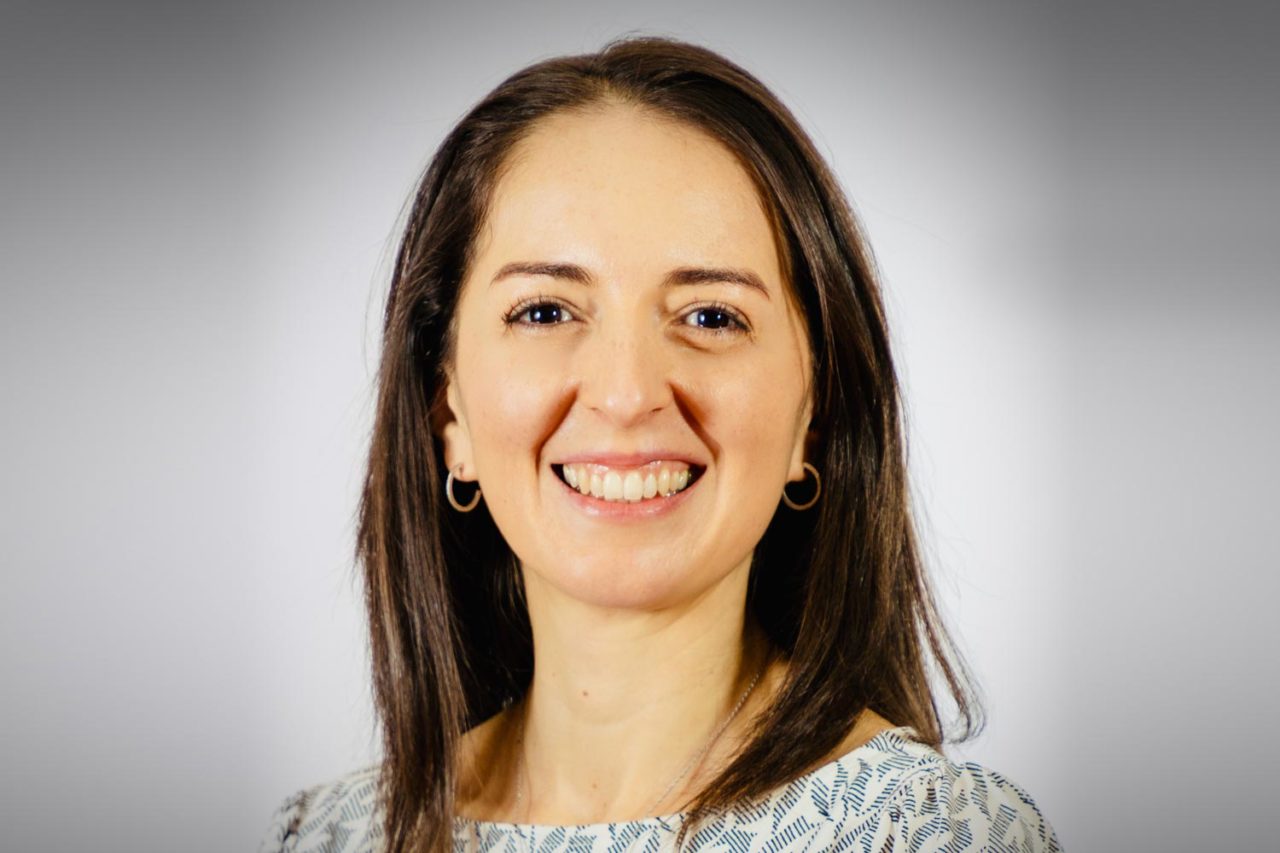
Carol Martinez Luna
Carol Martinez Luna
SpaceR, University of Luxembourg
Renaud Detry
Prof. Renaud Detry
KU Leuven

Scientific Committee:

Invited Speakers

Lukas Burkhard
Lukas Burkhard
Doctoral Researcher
German Aerospace Center (DLR)
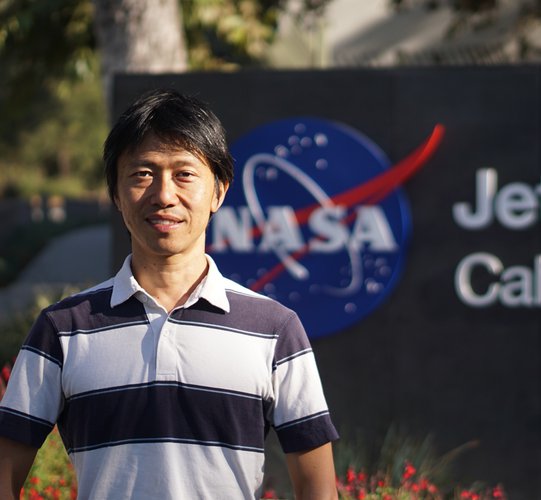
Masahiro Ono
Masahiro Ono
Group Supervisor of the Robotic Surface Mobility Group
NASA Jet Propulsion Laboratory
Jean Pierre De la Croix
Robotics Systems Engineer in the Maritime and Multi-Agent Autonomy
NASA Jet Propulsion Laboratory
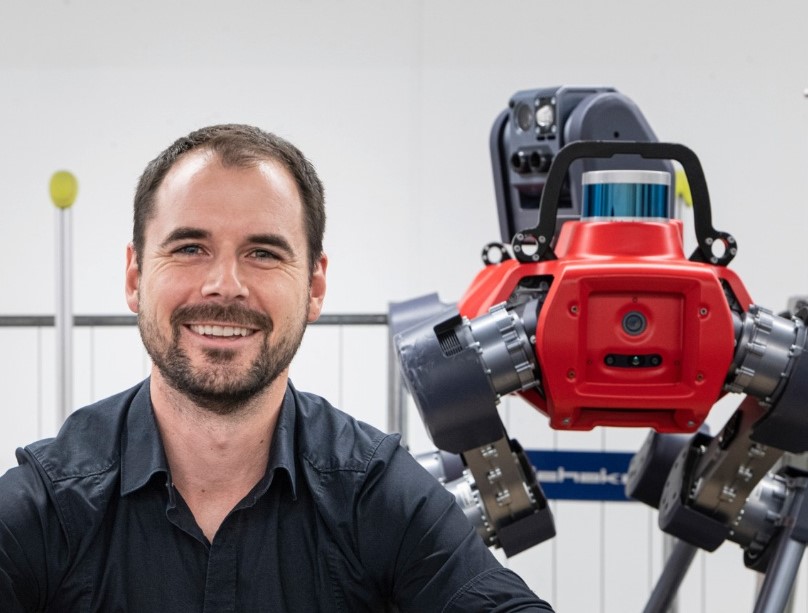
Marco Hutter
Marco Hutter
Full Professor at Dept. Mechanical and Process Engineering
ETH Zurich
Annika Thomas
Annika Thomas
Doctoral Researcher
Massachusset Institute of Technology (MIT)
Davide Scaramuzza
Davide Scaramuzza
Professor of Robotics and Perception
University of Zurich
Timothy Barfoot
Tim Barfoot
Professor at Institute for Aerospace Studies
University of Toronto

Program

*All times are in UTC+2
08:45 - Greetings and Introduction of the Workshop
By workshop organizers (15 mins)
Morning Session: Insights and Experience from Real Planetary Rover Missions
09:00 - Invited Talk, "Perceptual Challenges and Testing for the DLR Autonomous Exploration Experiment onboard the MMX Idefix Rover"
By Lukas Burkhard
09:30 - Invited Talk, Multi-agent autonomy on the Moon: Coordinated Autonomous Distributed Robotic Exploration (CADRE)"
By Dr. Jean-Pierre de la Croix
Coffee Break and Poster Session (10:00 - 11:00)
11:00 - Invited Talk, “Semantic and Object-Driven Localization for Multi-Rover Exploration in Planetary Environments”
By Annika Thomas
11:30 - Invited Talk, "The Lunar Leaper Mission"
By Prof. Marco Hutter
Contributed Papers Spotlight Talks (12:00 - 12:30)
1 - MoRoCo: Topology-Adaptive Human-Fleet Coordination under Restricted Communication
Zhuoli Tian, Yanze Bao, Yuyang Zhang, Meng Guo
2 - Visual SLAM on a Lunar Testbed for Polarization Cameras Under Challenging Lighting Conditions
Clayder Gonzalez, Edward Vanderfeen, Michael Milford, Thierry Peynot, Alejandro Fontan
3 - Event-Based State Estimation of Planetary Robots using Propeller Sensing
Ravi Kumar Thakur, Luis Granados Segura, Jan Klivan, Radim Spetlik, Tobiáš Vinklárek, Matouš Vrba, Martin Saska
4 - Simulation for Planetary Robotic Perception: A Concise Survey of Capabilities and Gaps
Hoyun Kim, Giseop Kim
5 - From Earth to the Moon: A Cross-Domain Study of Weakly-Supervised Traversability Estimation
Bartosz Ptak
6 - MARTIAN: A Rendering Framework for Aerial Mars Imagery from HiRISE Orbital Data
Dario Pisanti, Georgios Georgakis
7 - Terrain-Aware Perceptual Planning for Aerial Vehicles in Martian Environments
Jessica Eve Todd, Pedro Roque, Adam Johnson, Joel W. Burdick
8 - Trinity: Unifying Class-Agnostic Terrain and Semantic Segmentation for Planetary Environments by Leveraging Synthetic Data
Marcus G Müller, Wout Boerdijk, Maximilian Durner, Abel Roman Gawel, Roland Siegwart, Rudolph Triebel
9 - A Pilot Benchmark for NL-to-FOL Translation in Planetary Exploration
Hayden Moore, Suman Saha, Mahfuza Farooque
10 - Robust Semantic Constellation Matching and SLAM for Planetary Rover Global Localization
Emma Seabrook, Damien Vivet, Alberto Ricci
11 - Getting Close: Multi-Body Tracking Enables Camera-based Close Proximity Robotic Manipulation for On-Orbit Servicing
Anne Elisabeth Reichert, Maximilian Ulmer, Rudolph Triebel, Maximilian Durner
Joint lunch with the Space Robotic Workshop (12:30 - 13:30) in Lehar 3
Afternoon Session: Addressing the Perceptual Challenge
13:30 - Invited Talk, "To Boldly Go Where No Robots Have Gone Before: Advancing the Frontier of Exploration with Adaptive Robotic Space Systems"
By Dr. Masahiro Ono
14:00 - Invited Talk, "Active SLAM"
By Prof. Davide Scaramuzza
14:30 - Invited Talk, "Lunar Cargo Logistics"
By Prof. Tim Barfoot
Coffee Break and Poster Session (15:00 - 16:00)
16:00 - Panel Discussion
Panel with invited speakers and organizers (60 min)
17:00 - Closing Remarks
By workshop organizers (10 min)

Objectives

Our goal is to explore and identify new solutions towards the perceptual challenge that planetary rover systems face while exploring severly unstructured environments, under harsh illumationation conditions and extreme perceptual aliasing. In these scenarios, critical challenges arise with respect to fundamental tasks such as:

Topical Questions

Call for Papers

We welcome paper contributions related, but not limited, to the following topics of interest:

  • Challenges in and novel approaches for visual state estimation in percpetually degraded, e.g. planetary, environments
  • Multi-modal fusion of perceptual inputs for robust state estimation and navigation in planetary scenes
  • Unconventional perception strategies for future planetary missions
  • The role of semantic perception and mapping for terrain navigation and place recognition
  • Multi-robot cooperation for efficient exploration of large-scale planetary environments
  • Results of test campaigns in analogous planetary environments or laboratory settings
  • Challenges for testing and verification and validation for space-graded perception, localization and navigation software
  • The role of perceptual degradation in the interaction with planetary environments, e.g., manipulation and infrastructure building
  • All submitted papers will be reviewed on the basis of technical quality, relevance, significance, and clarity. Preference will be given to work conducted by early stage researchers and PhD students. We accept for the review extended abstracts of minimum 2 pages length including references, following the IEEE standard ( Latex, MS Word, Guidelines ). We welcome presentation of original and yet unpublished work, as well as extensions over already published contributions, or to technical contributions of ICRA 2026. Depending on the number of accepted submissions, all authors will be invited to provide a quick spotlight presentation at the end of the morning session. We will do our best to give everyone the stage to highlight their contributions, in the format of a 1/2-slides presentation. Authors of accepted contributions will be able to present their work during the poster sessions in the morning and in the afternoon sessions.

    Submissions are handled with OpenReview, using the venue reachable at this link. Submissions are already open!

    The committee will give a Best Poster award with a monetary prize to the most impressive work, based on the criterias of motivated scientific novelty, potential of further research avenues and overall quality of presentation. Stay tuned for the details!

    Important dates